Setup
What is load sharing?
Load sharing means distributing energy generation across multiple power sources. Instead of relying on a single source, such as the grid or a generator, several sources work together to share the load. This creates a more stable, efficient and sustainable power supply. Batteries make this possible.
How does load sharing work?
In a load sharing setup, a smart battery is connected to multiple energy sources: the grid, renewable sources (solar panels or wind turbines), or generators. Greener’s Energy Management System continuously measures energy demand and automatically controls all connected power generation assets optimising performance and guaranteeing the most sustainable power delivery possible.
When demand rises, the battery provides additional power. When demand drops, the battery charges by using power from the grid or the renewable sources available. This ensures that every source is used efficiently and the system remains balanced. It provides a reliable power supply while reducing fuel consumption and CO₂ emissions.
How does Greener apply load sharing?
Greener uses batteries in load sharing setups to deliver smart and flexible energy solutions. Our software ensures seamless cooperation between the battery and other energy sources. The system responds automatically to changes in energy demand, so there is always enough power available without waste or inefficiency.
This solution is ideal for locations where only an insufficient grid connection is available and there are opportunities to add other energy sources such as generators to a setup, such as construction sites, events, EV charging hubs, temporary housing or shore power applications. Load sharing helps open opportunities to utilise multiple power generating assets. It optimises efficiency, reduces wait times for grid upgrades and maximises the use of renewable energy.
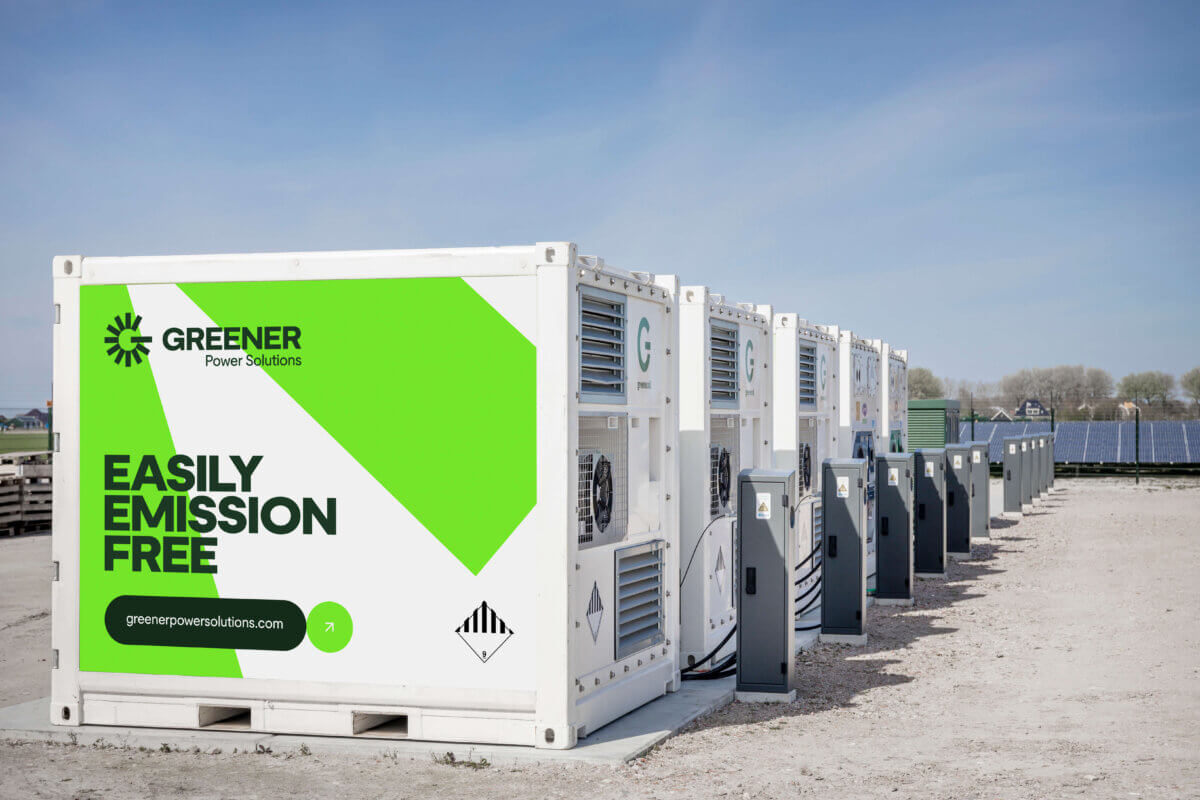
Applications load sharing across different sectors
Construction and Infrastructure
On construction sites, energy demand fluctuates throughout the day. Heavy machinery operates at full power during working hours, while little energy is needed at night. A load sharing system distributes this varying demand intelligently across multiple sources.
For construction projects with a limited grid connection or delays in grid upgrades, this provides a reliable and efficient solution. It reduces CO₂ emissions, minimises noise pollution and helps meet stricter emission regulations.
Events
During events, power demand constantly changes. Performances, light shows and camping facilities all require energy at different times. A smart load sharing system ensures every part of the event receives stable, sustainable power.
By using batteries to distribute energy, generators do not need to run unnecessarily. The batteries deliver power during peaks and recharge when demand drops. This keeps festivals cleaner and quieter, without risk of power outages. Event organisers reduce reliance on diesel fuel and in turn achieve a reduction in CO₂ emissions, meeting sustainability requirements with ease.
Grid Services
Growing pressure on the electricity grid causes delays for companies, construction projects and local authorities. Load sharing with mobile batteries makes it possible to create temporary extra capacity without waiting for a grid upgrade.
The battery stores energy during off-peak hours and delivers power during peaks. This reduces strain on the grid and allows projects to continue as planned. This solution is especially valuable for temporary housing, new construction sites and businesses with seasonal peaks in energy demand. By utilising any available grid connection to its fullest with a battery alongside other power generating assets, picking up the balance in energy demand when needed.
Rental Companies
Rental companies that include our batteries in their offering can provide clients with more than just temporary power. With a Greener battery, clients can combine different energy sources intelligently within a load sharing setup.
Quite often on a site there is an available grid connection, but these are disregarded as being unsuitable due to their small size. A load sharing setup is ideal in these cases as it enables these small grid connections to be used alongside a battery with other power generation assets to manage the demand in an intelligent way.
By offering batteries for load sharing, rental companies can meet the growing demand for emission-free and efficient power systems. They help clients comply with sustainability targets while reducing fuel and maintenance costs, improving operational efficiency.
EV-Charging
Charging electric vehicles often requires more power than the grid can supply. A load sharing setup distributes this demand between the battery, the grid and the charging points. This allows multiple vehicles to charge at the same time, even with a limited grid connection opening opportunities to maximise energy from the grid whilst negating any risk by adding other power generation assets to the setup to delivery additional energy if required.
The result is a stable, scalable and efficient charging system. Charging speed remains consistent, even in areas with limited grid capacity or temporary infrastructure. With Greener’s Energy Management System, energy use is monitored and optimised continuously. This is an efficient way for logistics hubs and event organisers to accelerate the shift to low emission transport.
Shore Power
Ships docked at a port require substantial energy for lighting, ventilation and onboard systems. This is often supplied by diesel generators, but a load sharing setup makes it much more sustainable. The battery distributes the load between the shore grid, renewable energy sources and, if necessary, a generator. When energy demand rises on board, the battery instantly provides extra power.
This ensures that there is always enough capacity without unnecessary emissions or strain on the grid. For ports, shipyards and temporary housing on vessels, this is a future-ready solution that delivers reliable, safe and low-emission power.