Blog
Commercial battery energy storage systems (BESS) provide businesses with a proven set of applications: peak demand management, backup power, renewable energy integration, grid services, and load shifting. Each of these delivers measurable cost savings and reliability benefits tailored to commercial operating environments.
For businesses facing high demand charges, grid reliability concerns, or sustainability commitments, a commercial battery energy storage system offers a direct path to lower operating costs and greater energy independence. Whether you manage a manufacturing facility, a data centre, or a healthcare institution, understanding how BESS works and where it delivers the greatest value is the first step toward building a credible internal business case.
What are battery energy storage systems and how do they work in commercial settings?
Battery Energy Storage Systems are large-scale power storage solutions that capture electrical energy during low-demand periods and discharge it when needed. These systems typically use lithium-ion technology — with chemistries such as lithium iron phosphate (LiFePO4) being common in commercial deployments for their thermal stability and cycle life — housed in modular containers that include integrated inverters, cooling systems, and control interfaces connecting seamlessly to existing electrical infrastructure.
In commercial environments, these systems operate through sophisticated energy management software that monitors consumption patterns and automatically optimises charging and discharging cycles. The modular design allows businesses to scale capacity from single units to multiple megawatt-hours depending on requirements. Modern commercial battery systems can deliver power outputs ranging from 225 kVA to over 900 kVA, with storage capacities from 281 kWh up to 1,405 kWh per installation.
Core system components
A commercial BESS is built around several distinct components that work together. The Battery Management System (BMS) monitors cell-level voltage, temperature, and state of charge to protect the battery and extend its operational life. The Energy Management System (EMS) sits above the BMS and makes real-time decisions about when to charge, discharge, or export energy based on tariff data and demand forecasts. Bidirectional inverters convert DC power stored in the battery cells into AC power usable by commercial equipment, and vice versa during charging.
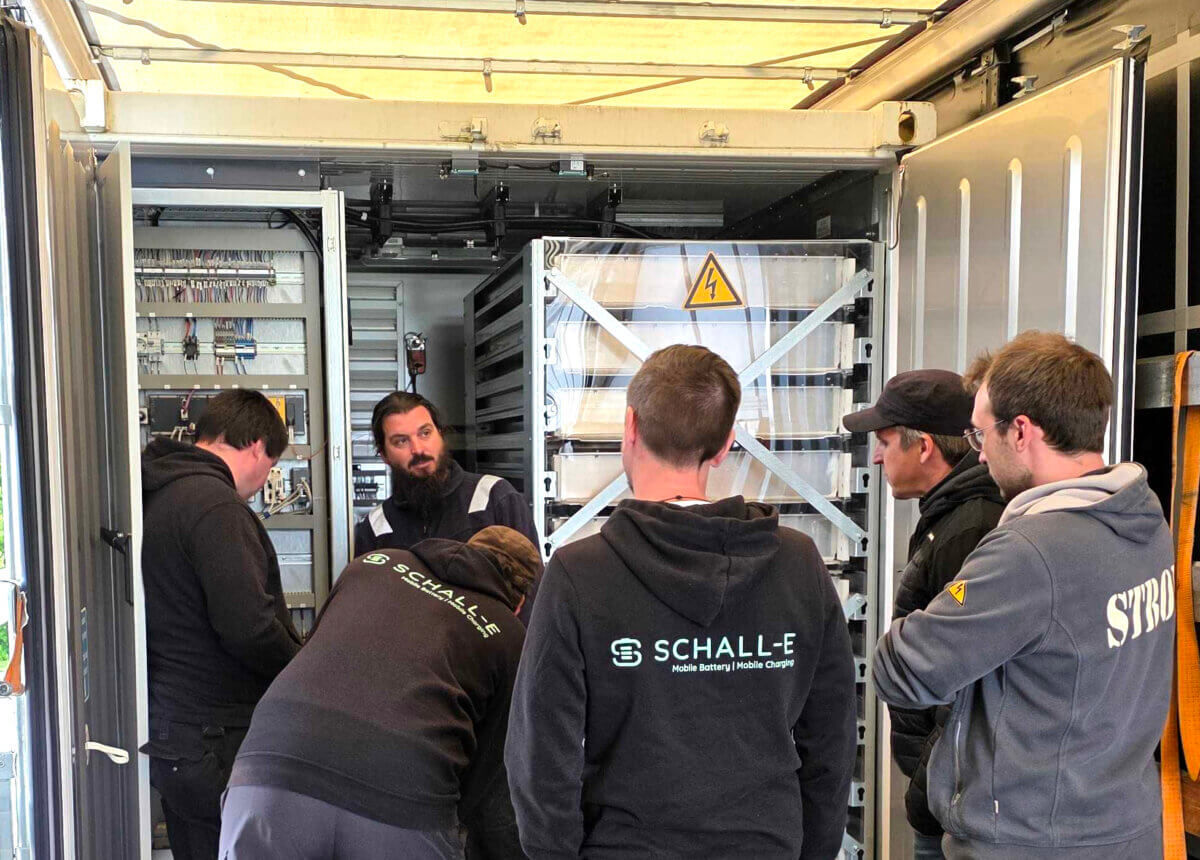
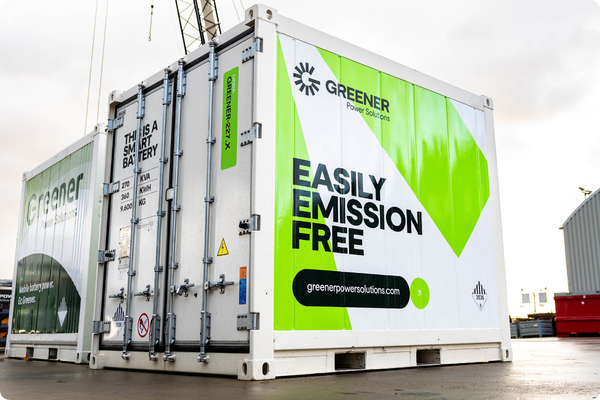
Cooling system design is another key consideration. Air-cooled configurations are common in smaller commercial installations, while liquid-cooled systems offer superior thermal management for higher-density or larger-capacity deployments. Containerised BESS units combine all components in a single enclosure, simplifying installation on sites with limited indoor space.
Safety and integration
Integration with existing electrical infrastructure involves connecting the battery system to the facility’s main electrical panel through specialised inverters that convert DC battery power to AC power. The system includes safety mechanisms such as automatic shutdown protocols, continuous temperature monitoring, and emergency stop switches. Advanced systems feature GridSync technology that enables frequency conversion between 50–60 Hz and voltage adjustment capabilities. Reputable commercial systems are designed and tested to internationally recognised safety standards, including IEC 62619 for battery safety and UL 9540A for fire safety of energy storage systems — certifications that matter when navigating building permits and utility interconnection approvals.
What are the main commercial applications of battery energy storage?
Commercial battery storage serves five primary applications: peak demand management, backup power systems, renewable energy integration, grid services, and load shifting operations. These applications span across manufacturing facilities, office buildings, retail centres, healthcare institutions, and industrial operations requiring reliable power supply.
The relative priority of each application depends on a business’s specific energy profile, utility tariff structure, and operational requirements. Most commercial deployments leverage more than one application simultaneously, which is where the financial case becomes most compelling.
- Peak demand management: Batteries discharge during high-demand periods to reduce expensive demand charges — typically the single largest cost lever for commercial BESS.
- Backup power: Provides critical power during outages, particularly important for hospitals, data centres, and manufacturing facilities where downtime carries significant financial or safety consequences.
- Renewable energy integration: Stores solar or wind energy for use when generation is unavailable, improving self-consumption rates and reducing grid dependency.
- Grid services: Frequency regulation, voltage support, and load balancing that help stabilise the electrical grid while generating additional revenue streams for the business.
- Load shifting: Stores energy during off-peak hours when electricity rates are lower and deploys it during expensive peak periods, directly reducing the energy component of electricity bills.
Emergency power applications ensure business continuity during grid failures, while shore power solutions at ports and marine facilities replace diesel generators — reducing both emissions and operating costs in logistics-intensive environments.
How do battery energy storage systems reduce commercial energy costs?
Battery systems reduce commercial energy costs through three primary financial mechanisms: demand charge reduction, time-of-use optimisation, and energy arbitrage. The relative contribution of each mechanism depends on the local utility tariff structure, but together they form a compelling financial case for most commercial energy users.
Demand charge reduction
Demand charges — fees based on a facility’s highest power draw within a billing period — can account for 30–50% of a commercial electricity bill. By discharging stored energy during peak demand windows, a BESS reduces the measured peak, directly cutting this charge. This is typically the fastest payback mechanism for commercial installations with pronounced demand spikes.
Time-of-use optimisation and energy arbitrage
Time-of-use optimisation involves charging batteries during low-cost periods and discharging during expensive peak hours. Energy arbitrage extends this logic further: the system purchases electricity when prices are lowest and deploys stored energy when rates rise, capturing the price differential as a direct saving. The value of this strategy depends on the spread between off-peak and peak tariff rates in a given location.
Long-term financial benefits
Beyond monthly bill reductions, commercial BESS installations can defer or eliminate costly electrical service upgrades by providing supplemental power capacity from storage rather than requiring a larger grid connection. Businesses also avoid demand ratchet charges — penalties utilities impose based on peak monthly usage over a rolling period. Grid services revenue programmes, where available, provide an additional income stream by compensating businesses for supporting grid stability. The modular nature of modern systems allows businesses to start with a right-sized installation and expand as energy needs grow, protecting the initial capital investment.
What industries benefit most from commercial battery storage solutions?
Manufacturing, healthcare, data centres, retail, hospitality, and agriculture sectors gain the most significant advantages from commercial battery storage due to their high energy demands, critical power requirements, and substantial demand charges. These industries typically see the fastest return on investment from battery storage implementations.
Manufacturing and industrial operations
Manufacturing facilities benefit from reduced demand charges during production peaks and backup power for critical processes. Industrial operations with large motor loads — compressors, presses, conveyors — generate sharp demand spikes that BESS can absorb, directly reducing demand charge exposure. Backup power also protects against costly production line shutdowns during grid disturbances.
Healthcare
Healthcare institutions require uninterrupted power for life-support systems, surgical equipment, and climate-controlled medication storage. Battery backup systems provide a faster and cleaner response to outages than traditional diesel generators, with no fuel logistics or emissions concerns. Many healthcare facilities are also subject to regulatory requirements around power resilience, making BESS a compliance tool as well as a cost-reduction measure.
Data centres
Data centres use battery storage for both backup power and cooling system support during peak demand periods. The high, consistent energy loads typical of data centres make them well suited to time-of-use optimisation, and the critical nature of their operations makes reliable backup power non-negotiable. Battery systems also support power usage effectiveness (PUE) targets by enabling more precise load management.
Retail, hospitality, and agriculture
Retail operations benefit from load shifting during high-traffic periods and backup power for refrigeration systems, where an outage can result in significant stock losses. Hotels and hospitality businesses use battery storage to manage air conditioning loads and ensure guest comfort during peak periods. Agricultural operations benefit from powering irrigation systems, cold storage facilities, and processing equipment when grid power is expensive or unavailable.
EV charging and temporary installations
Electric vehicle charging facilities represent a rapidly growing commercial application, where batteries enable fast charging capabilities even where grid connection capacity is limited — avoiding expensive infrastructure upgrades. Construction sites and temporary installations use mobile battery systems to replace diesel generators, reducing emissions and noise while providing reliable power for tools and equipment.
What should businesses consider when implementing battery energy storage systems?
Businesses should evaluate system sizing based on peak demand patterns, available space for installation, electrical infrastructure requirements, and local regulations governing energy storage systems. Proper sizing requires analysing at least 12 months of energy usage data to determine optimal capacity and power requirements for maximum cost savings.
Installation and site requirements
Installation considerations include adequate ventilation or active cooling for battery systems, accessibility for ongoing maintenance, and proximity to electrical panels for efficient integration. The choice between air-cooled and liquid-cooled configurations, or a fully containerised unit, will depend on available space, ambient temperature conditions, and capacity requirements. Regulatory compliance involves understanding local fire codes, building permits, and utility interconnection requirements that vary by location and system size — a process we guide clients through as part of every project.
Safety protocols and maintenance
Safety protocols require comprehensive staff training, regular maintenance schedules, and documented emergency response procedures. Modern systems include automatic safety features aligned with IEC 62619 and UL 9540A standards, but businesses need clear protocols for manual shutdown procedures and emergency contacts. Maintenance needs typically involve quarterly inspections, software updates, and continuous performance monitoring through 24/7 energy management systems.
Return on investment and scalability
Return on investment factors include local electricity rates, demand charge structures, available government incentives or rebates, and potential revenue from grid services programmes. Businesses should also consider scalability options, as modular systems allow future expansion without replacing existing equipment — an important factor when energy needs are expected to grow alongside operations. Professional consultation ensures optimal system design, full regulatory compliance, and maximum financial return from the installation.
Commercial battery energy storage systems offer substantial benefits across multiple applications and industries. The technology provides immediate cost savings through demand management whilst supporting long-term sustainability goals. When properly sized and implemented, these systems deliver reliable power, reduce operating costs, and provide energy independence for businesses of all sizes. We specialise in comprehensive energy storage system design and integration consulting, helping businesses navigate the technical and regulatory aspects of implementing optimal battery storage solutions. Contact our energy storage experts for professional guidance on your commercial battery storage requirements.