Main results:
- Five hybrid setups ran fully off-grid throughout the Staatsloterij World Rowing Championships
- Together the setups saved 11,373 litres of fuel, 1,434 generator running hours, 36 tonnes of CO2 and 178 kg of NOx
- Generator running time cut by an average of 87% thanks to the batteries
From 24 to 30 August 2026, the Staatsloterij World Rowing Championships took place on the Bosbaan in Amsterdam, organised by TIG events. For seven days the world’s top rowers competed for the world titles, with thousands of spectators lining the course. An international event on this scale puts real pressure on the local energy infrastructure: temporary facilities are built up, energy demand peaks, and a power cut during a race is not an option. That calls for a stable, temporary power supply.
Hybrid as the answer to a fully loaded grid connection
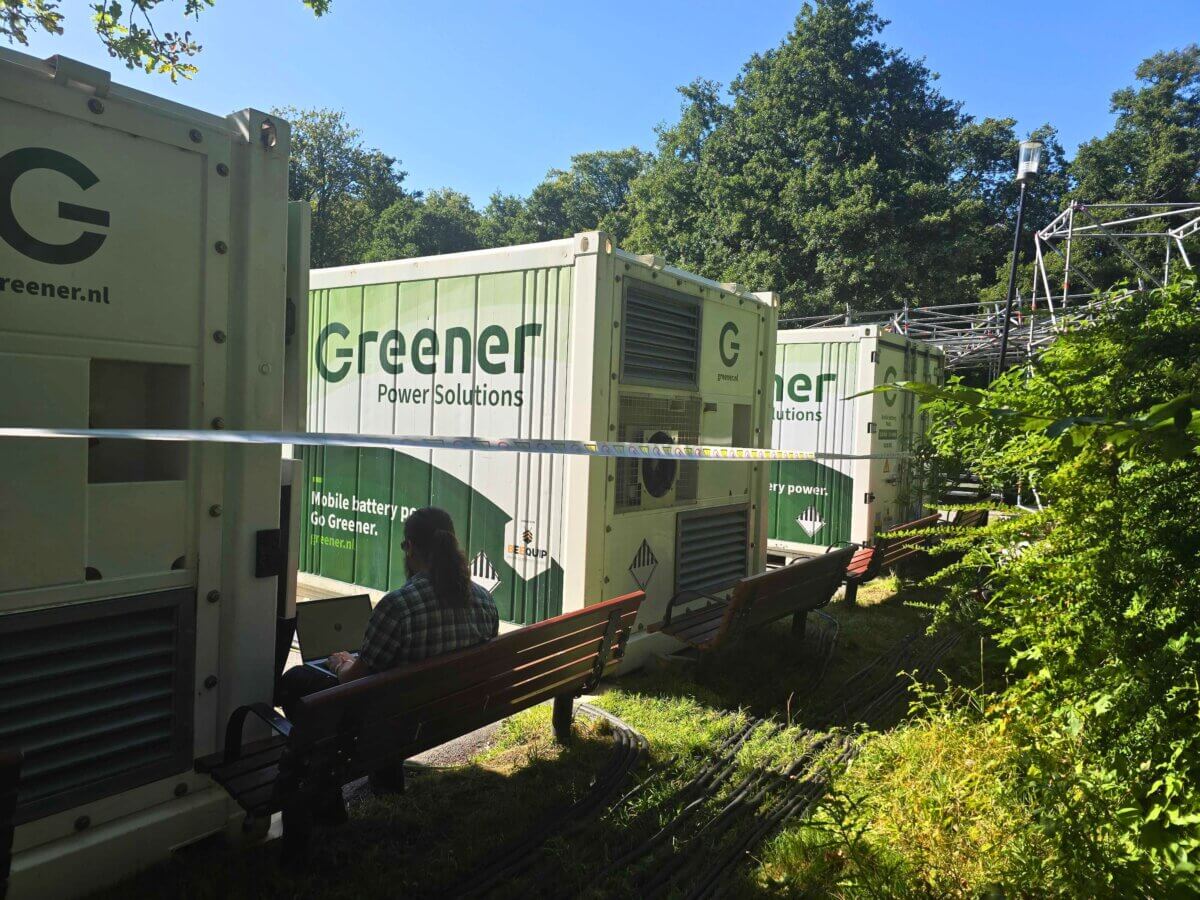
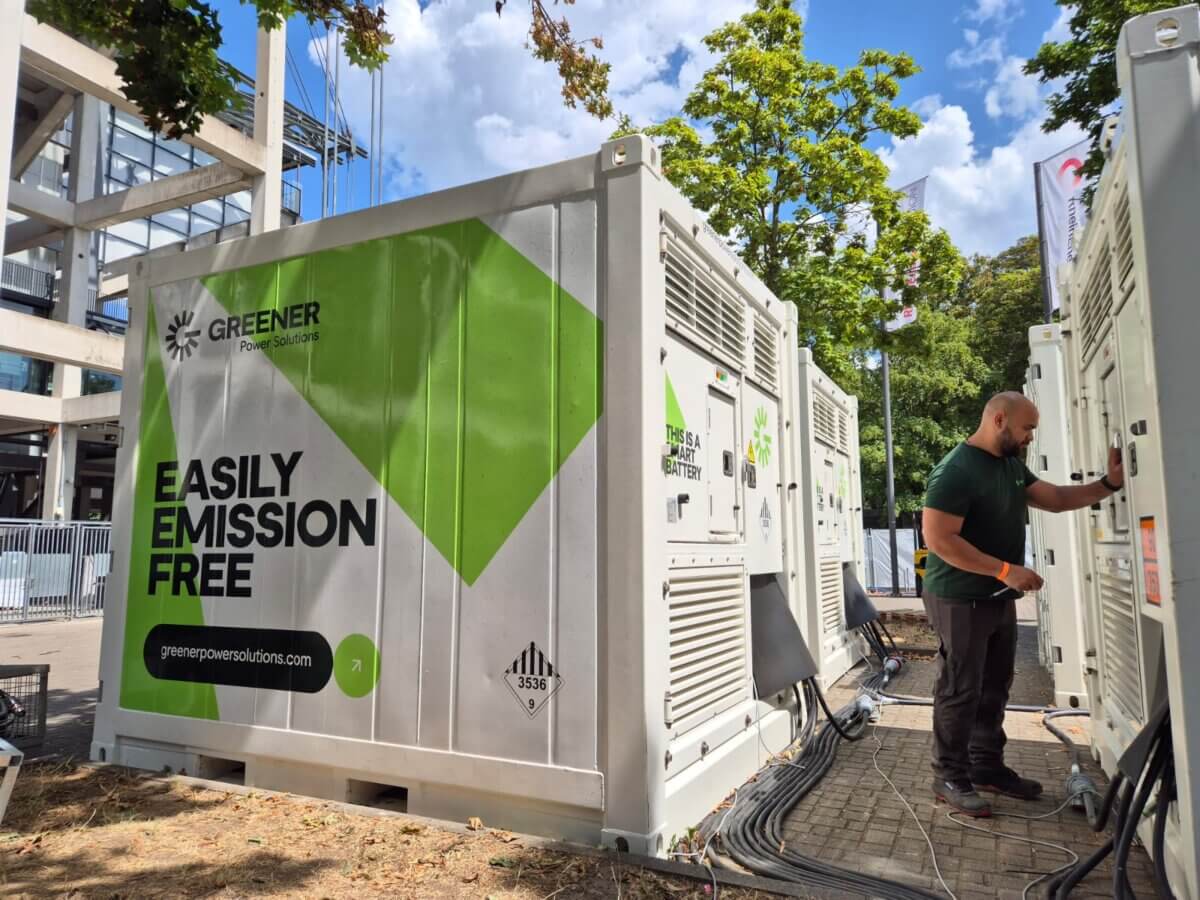
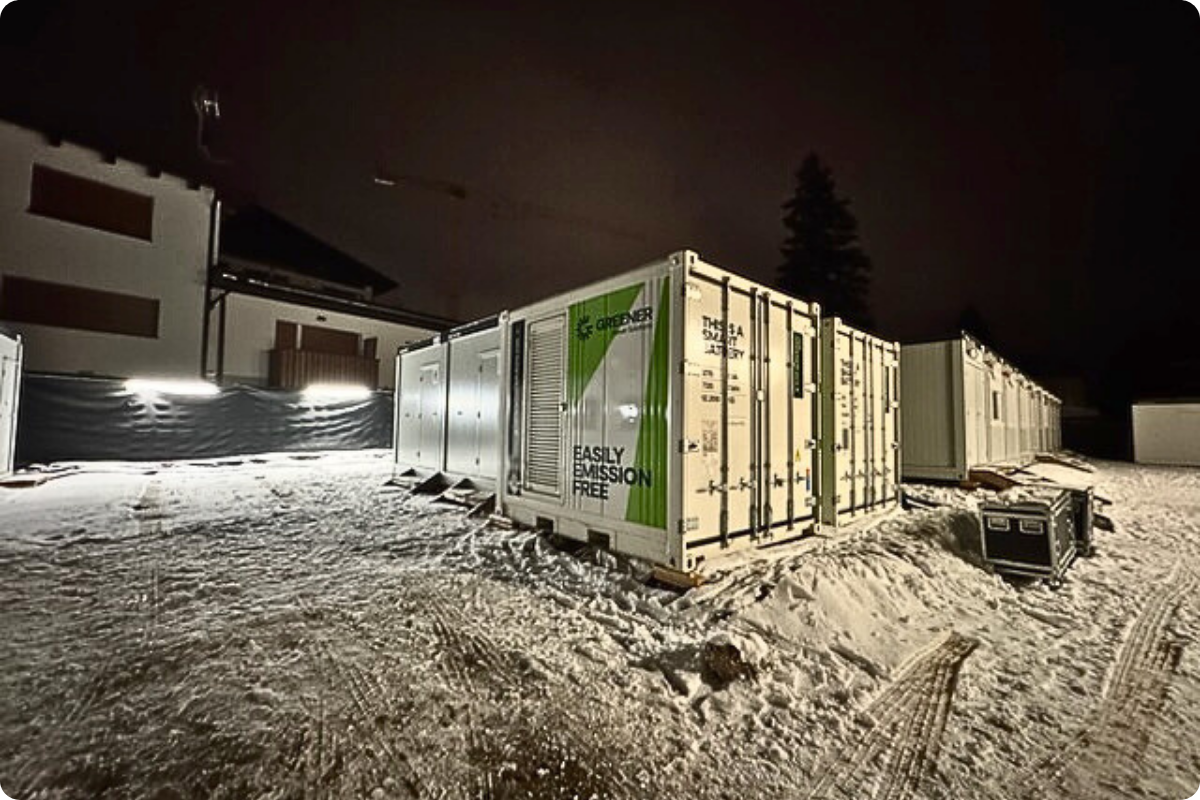
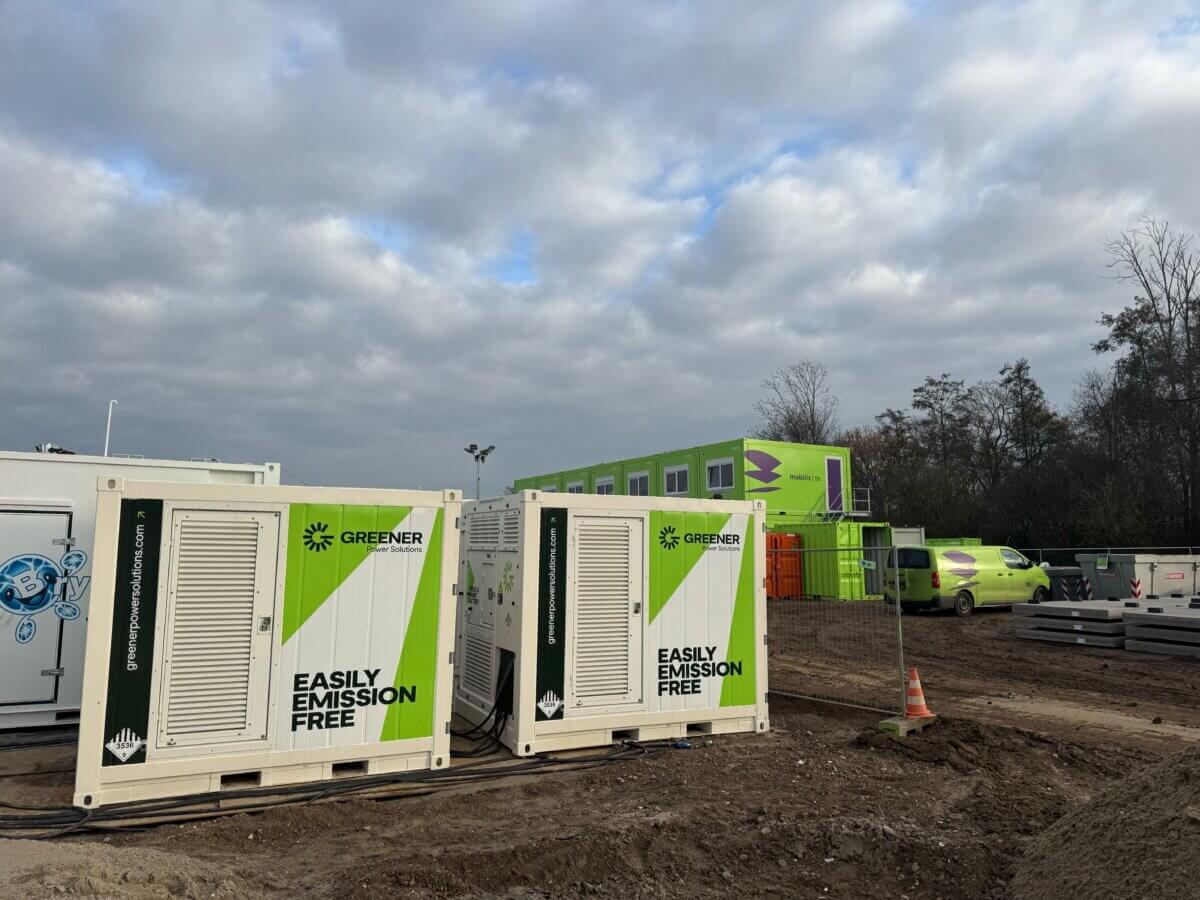
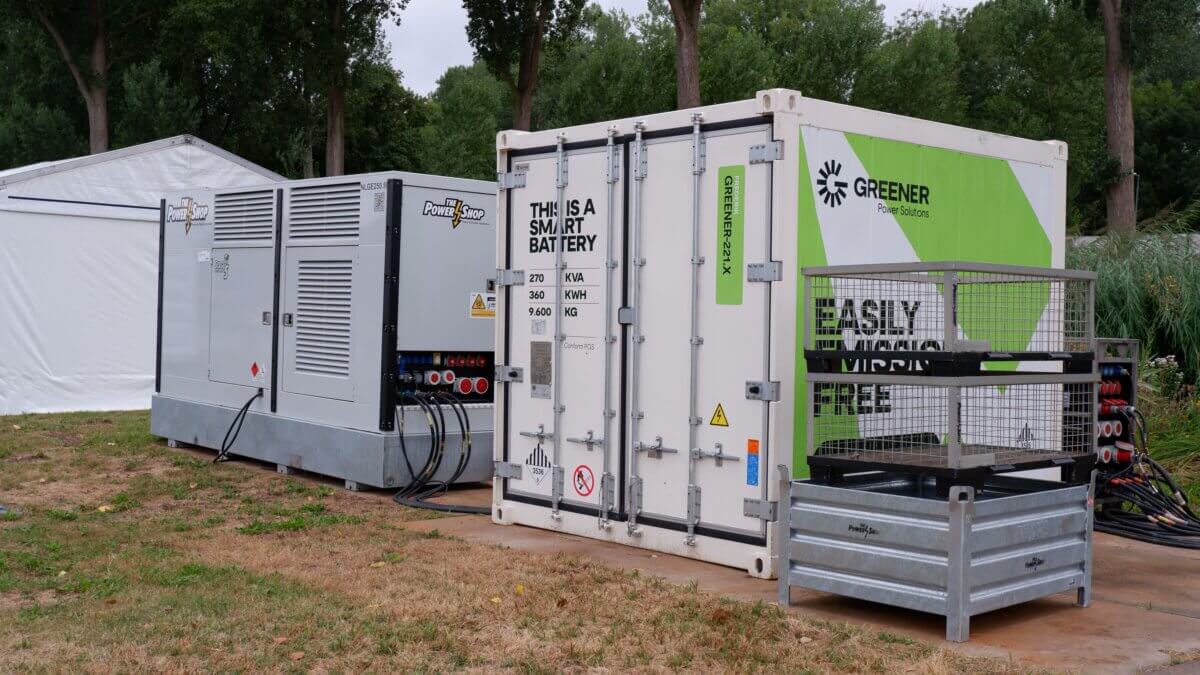
The available energy from the grid connection at the Bosbaan was already being used to its limit. So, commissioned by The Powershop Nederland B.V., we placed five separate hybrid setups with Greener batteries at five locations: the catering square, the VIP area, the finish, the main grandstand and Final & Rescue Island. In a hybrid setup the battery delivers the primary power, while the generator only runs to charge it when needed. All five ran fully off-grid. More efficient than generators alone, with lower consumption and lower emissions, and therefore cleaner.
Keeping oversight across five setups at once
Five independent hybrid setups on one site calls for oversight. Our Greener EMS monitored consumption and state of charge for each setup around the clock, and automatically controlled the generator per setup as soon as the battery needed a top-up. All data came together in dashboards showing energy consumption, emissions and fuel savings per setup, which form the basis for the figures in this case.
More energy from the same amount of fuel
The Powershop had calculated in advance that a hybrid setup could get 1.5 times more energy out of the same amount of HVO100 fuel. At low load a generator runs inefficiently, which works out at around 2.25 kWh per litre of HVO100. Combined with a Greener battery, the generator runs at its most efficient point and moves towards 3.5 kWh per litre, well over 55% more energy from the same amount of fuel. In practice the saving turned out higher still, and that applied to all five locations, despite their differing load profiles.
Across the full project period the five setups together saved 11,373 litres of fuel and 1,434 generator running hours, with 49 to 72% less fuel consumption and 84 to 93% fewer generator running hours per location. That resulted in 36 tonnes less CO2 and 178 kg less NOx, compared with five 250 kVA generators running continuously.
Less fuel, the same certainty: all five setups ran without interruption for seven days, while the championships handed out their world titles.