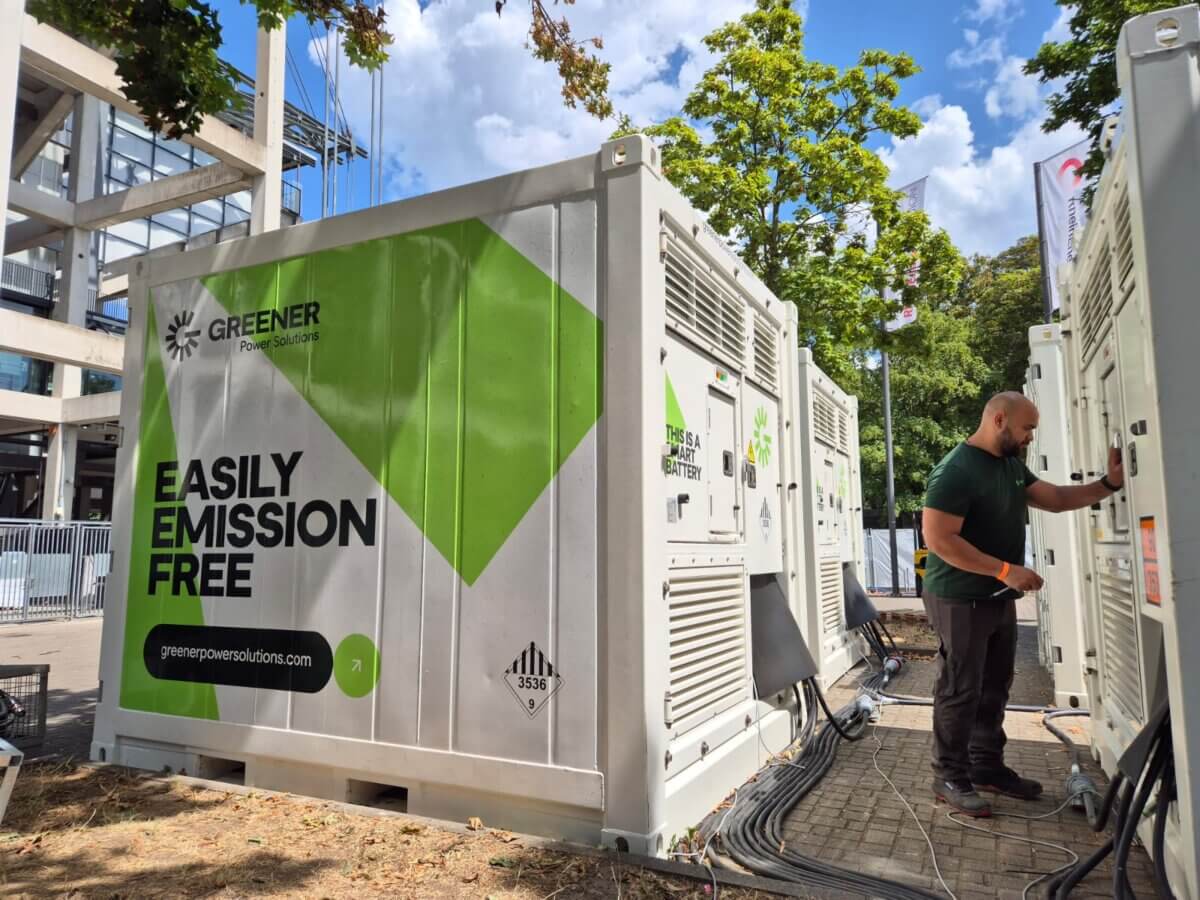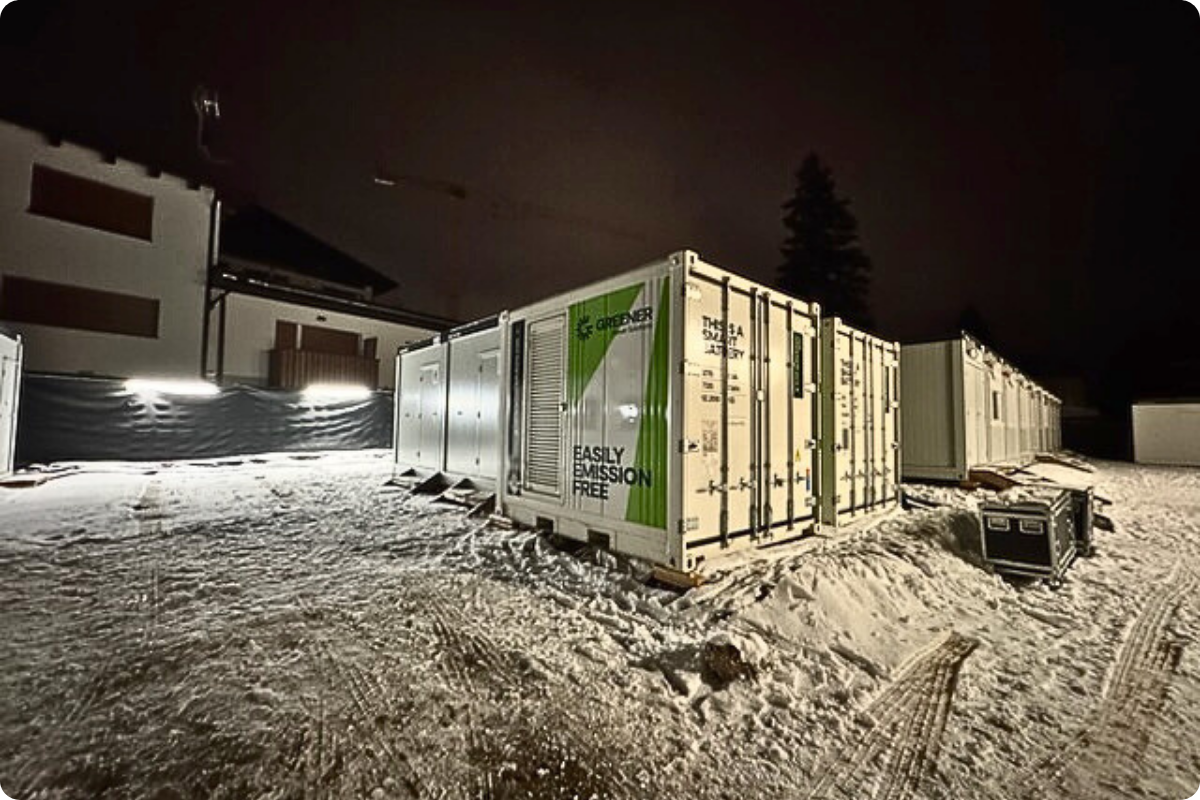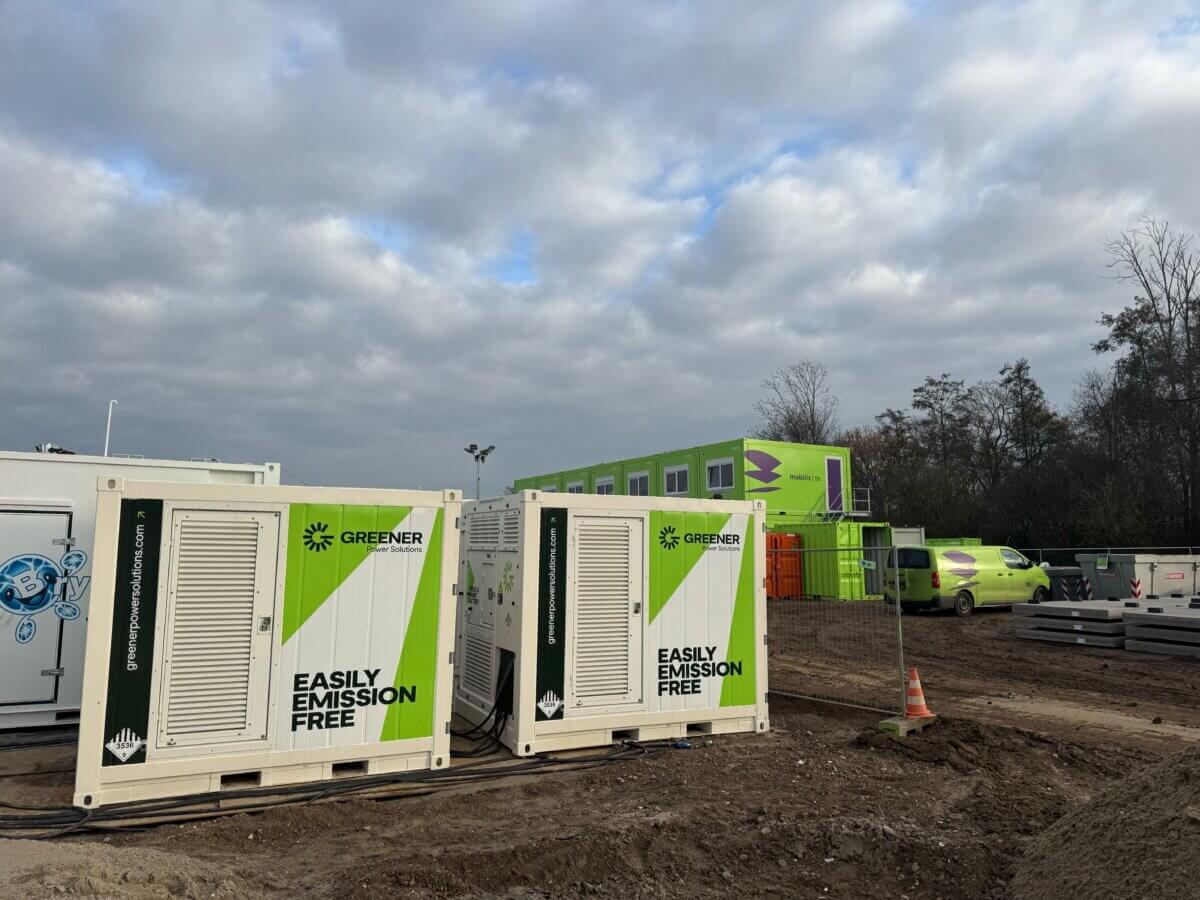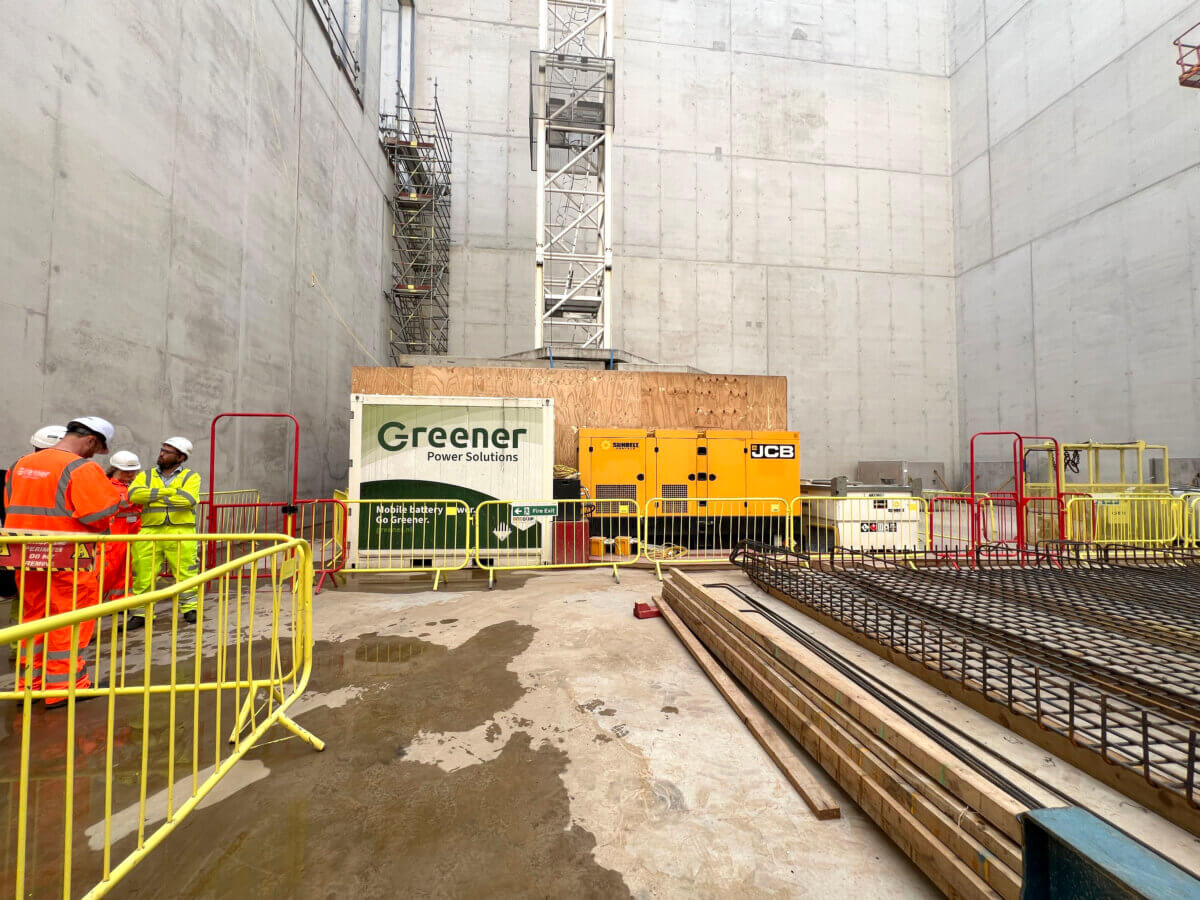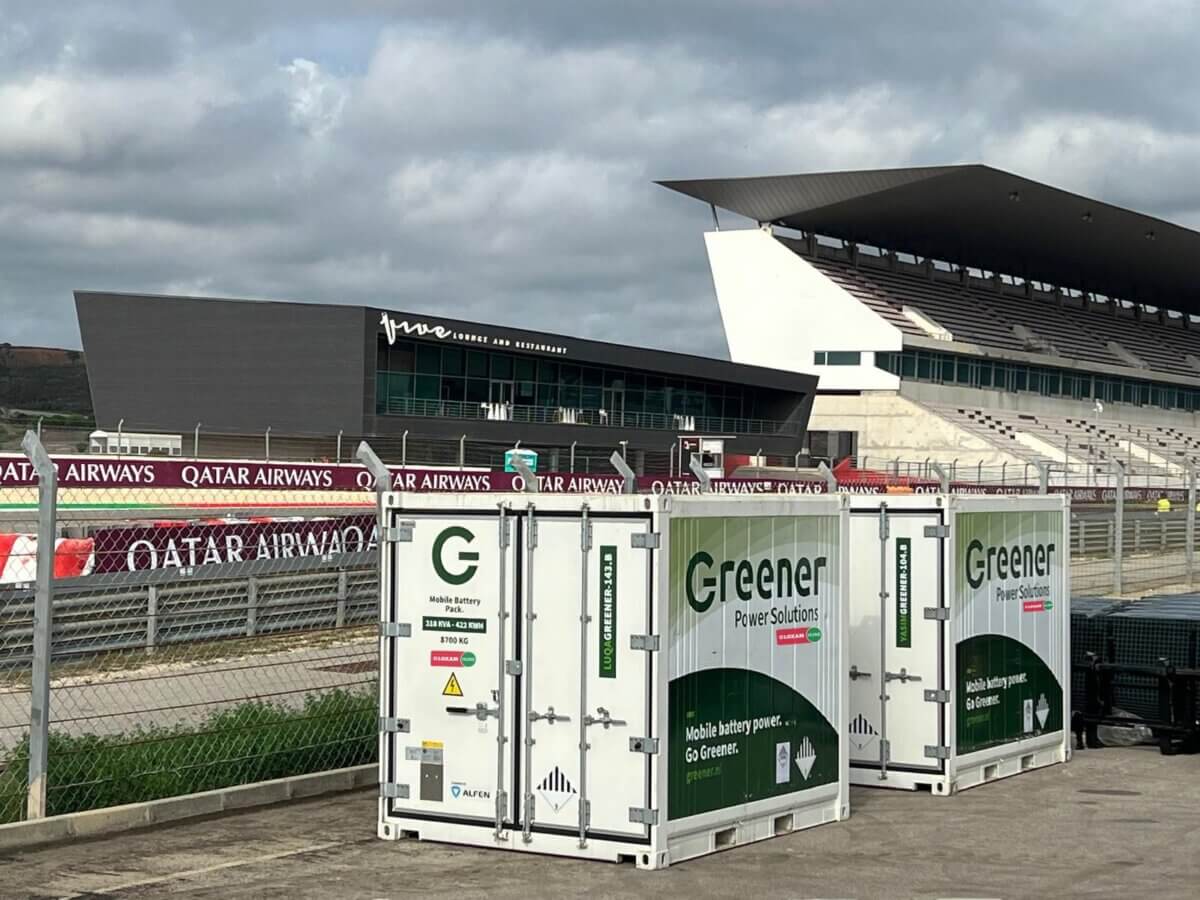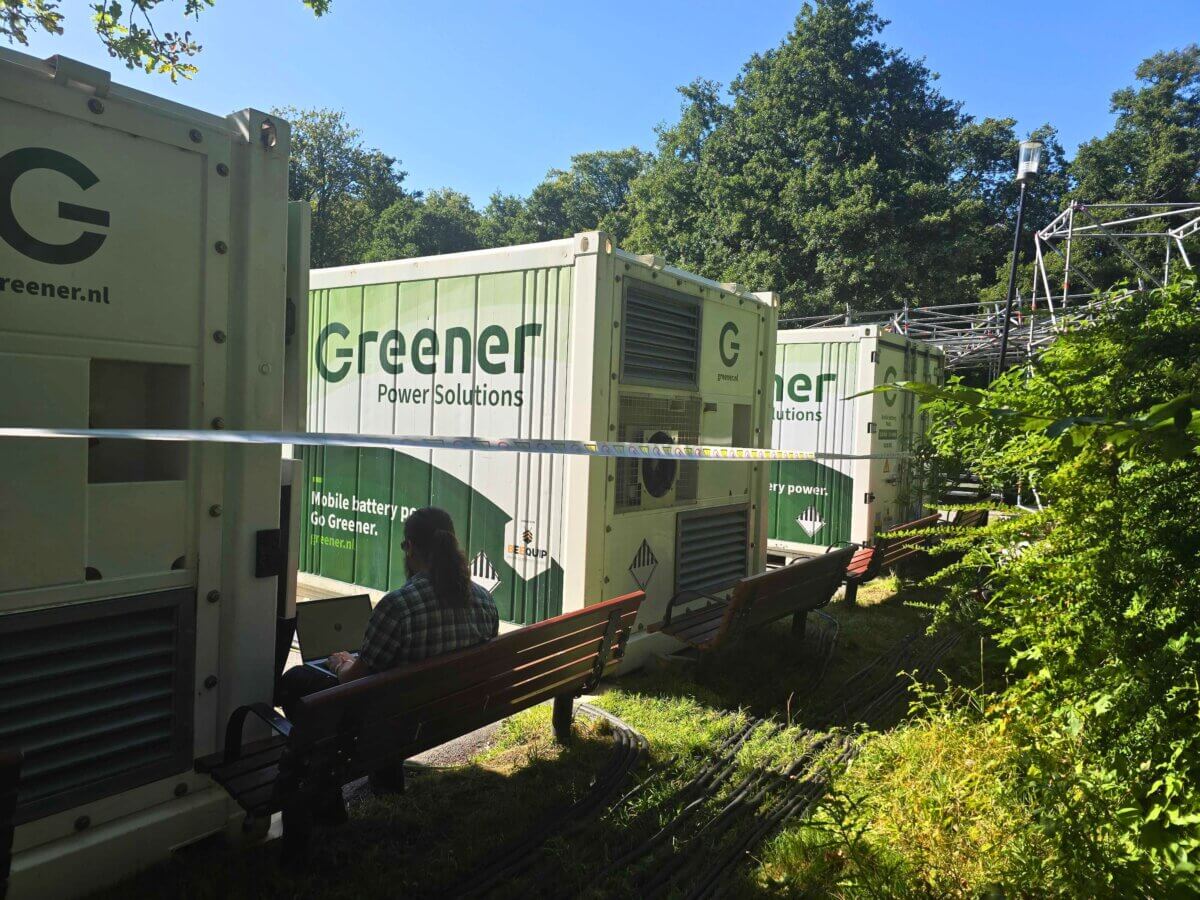
Battery 360 Mobile X
More specs
- Capacity
- 360 kWh
- Power
- 270 kVA
- Weight
- 9,600 kg
- Dimensions
- 10ft
- Input
- Powerlock 400A (125A CEE optional)
- Output
- 2x Powerlock 400A and 63A CEE
- Frequency
- 50/60Hz
- Voltage AC
- 400V
- Outside temperature
- -25°C to +35°C
- IP Rating
- IP54
MAIN RESULTS:
- 3051 lfuel saved
- 103 generator running hours saved
- 10tonnes of CO₂ saved
- 46 kgNOx saved
- Results above based on a 550 kVA generator running always when there is energy measured at the load
- Batteries delivering dynamic loads in a droop set-up combining batteries, grid and generators
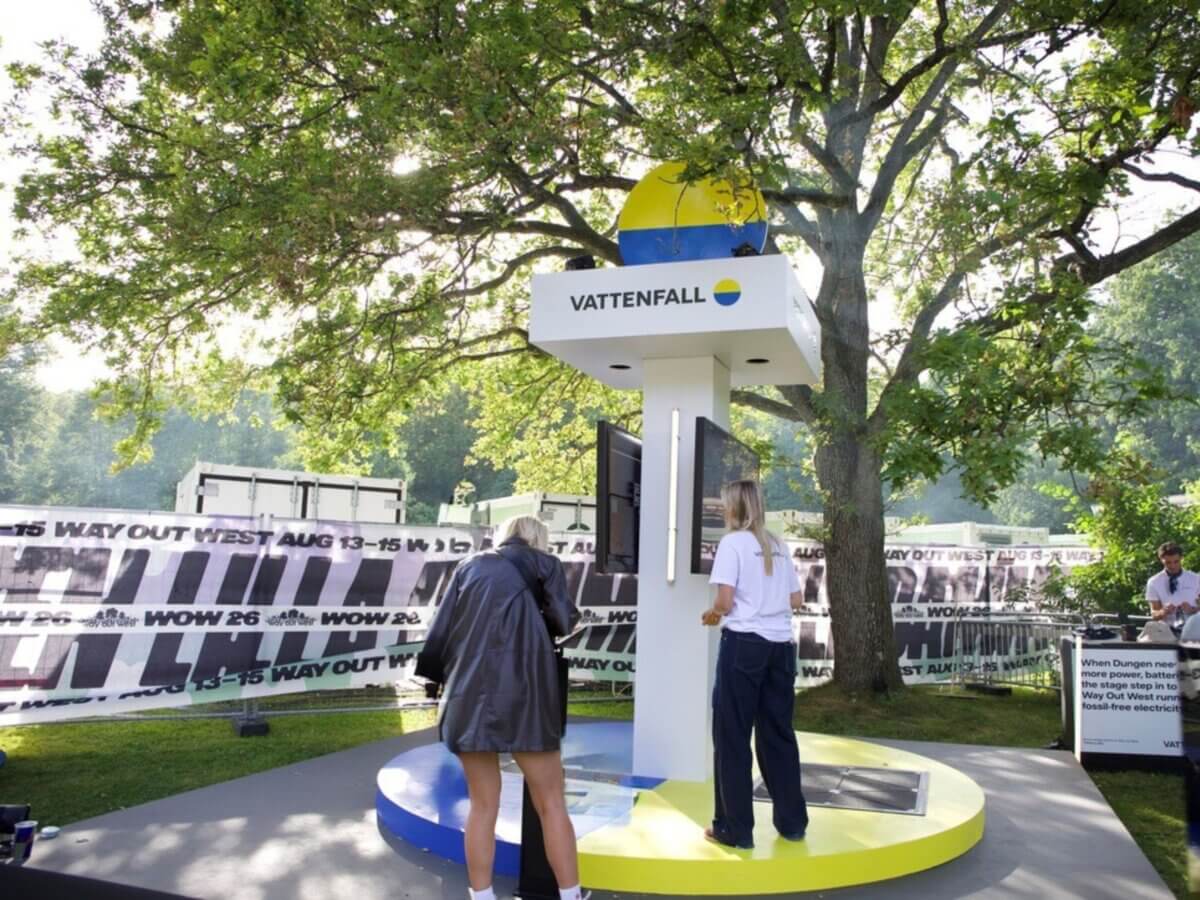
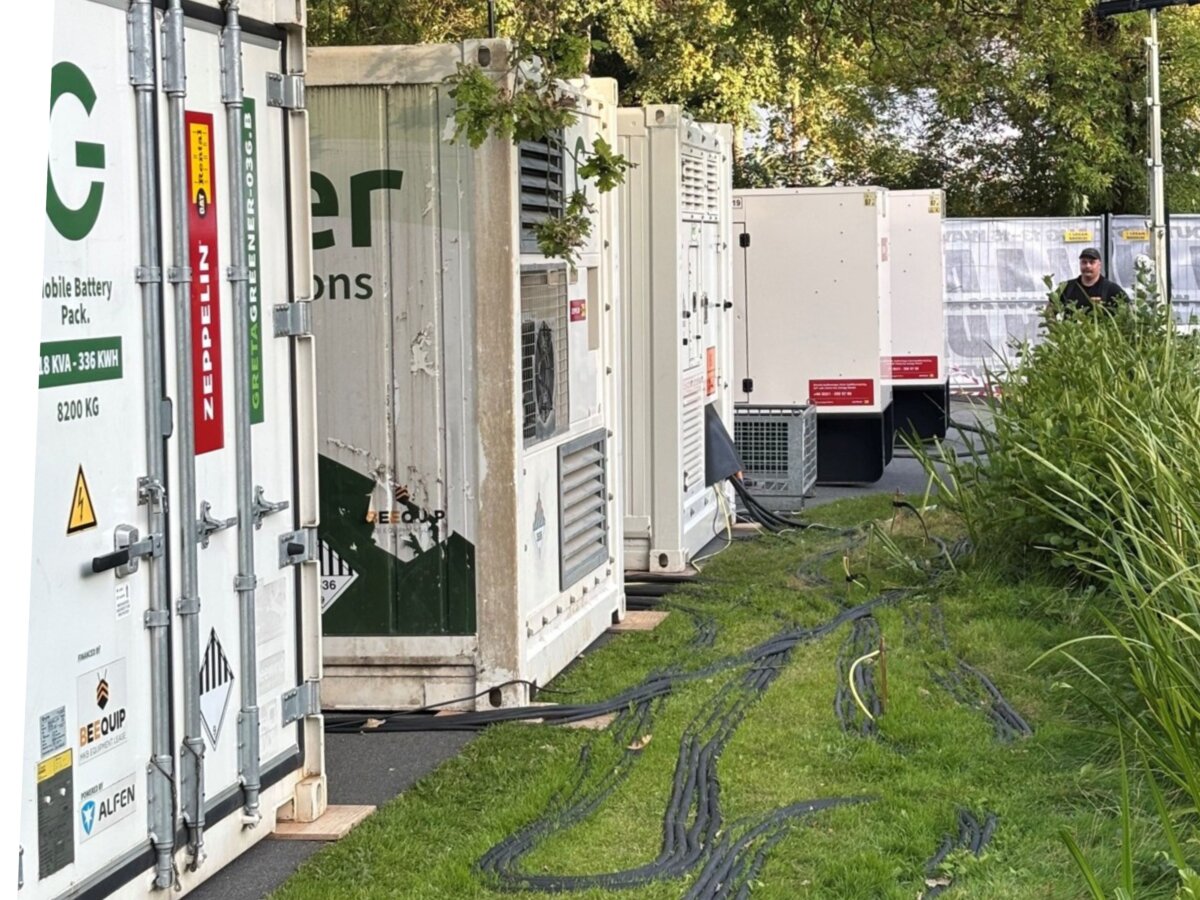
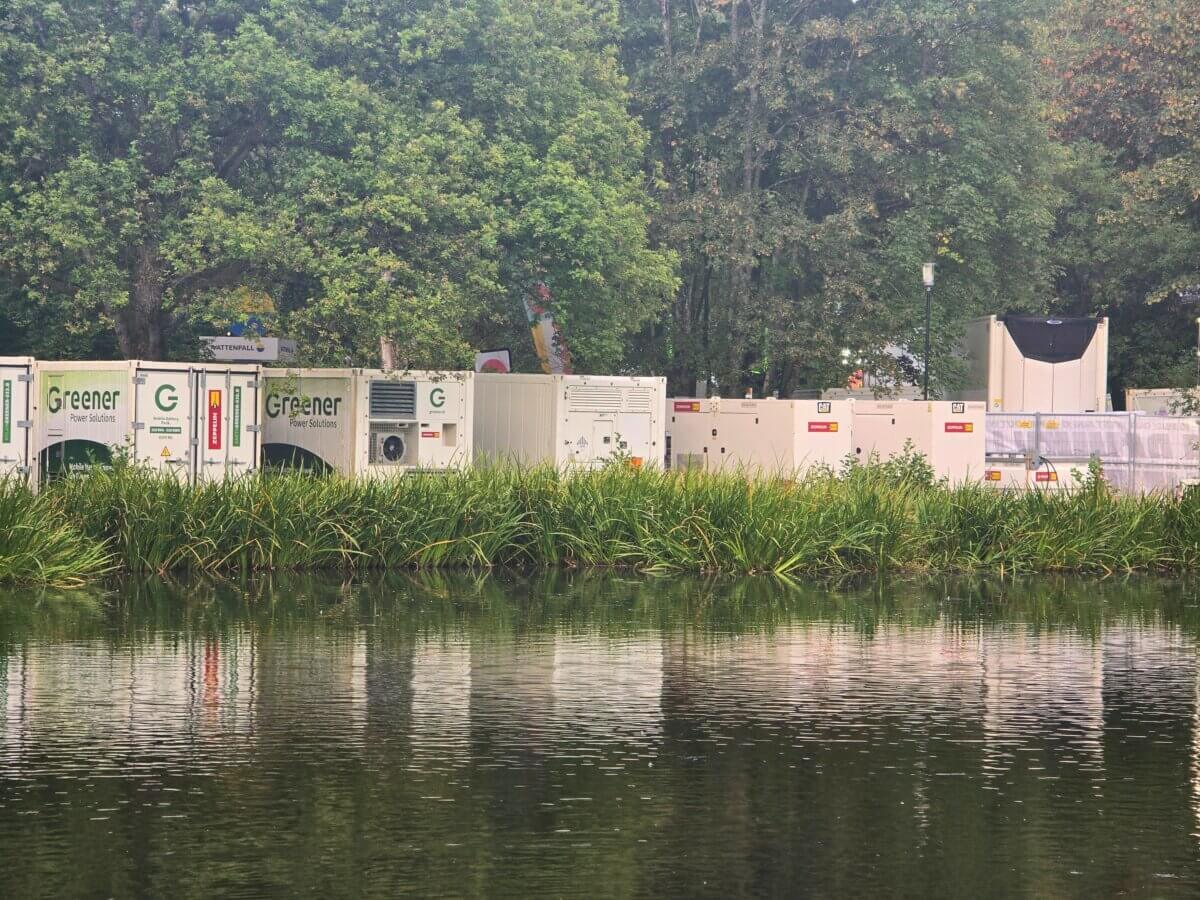
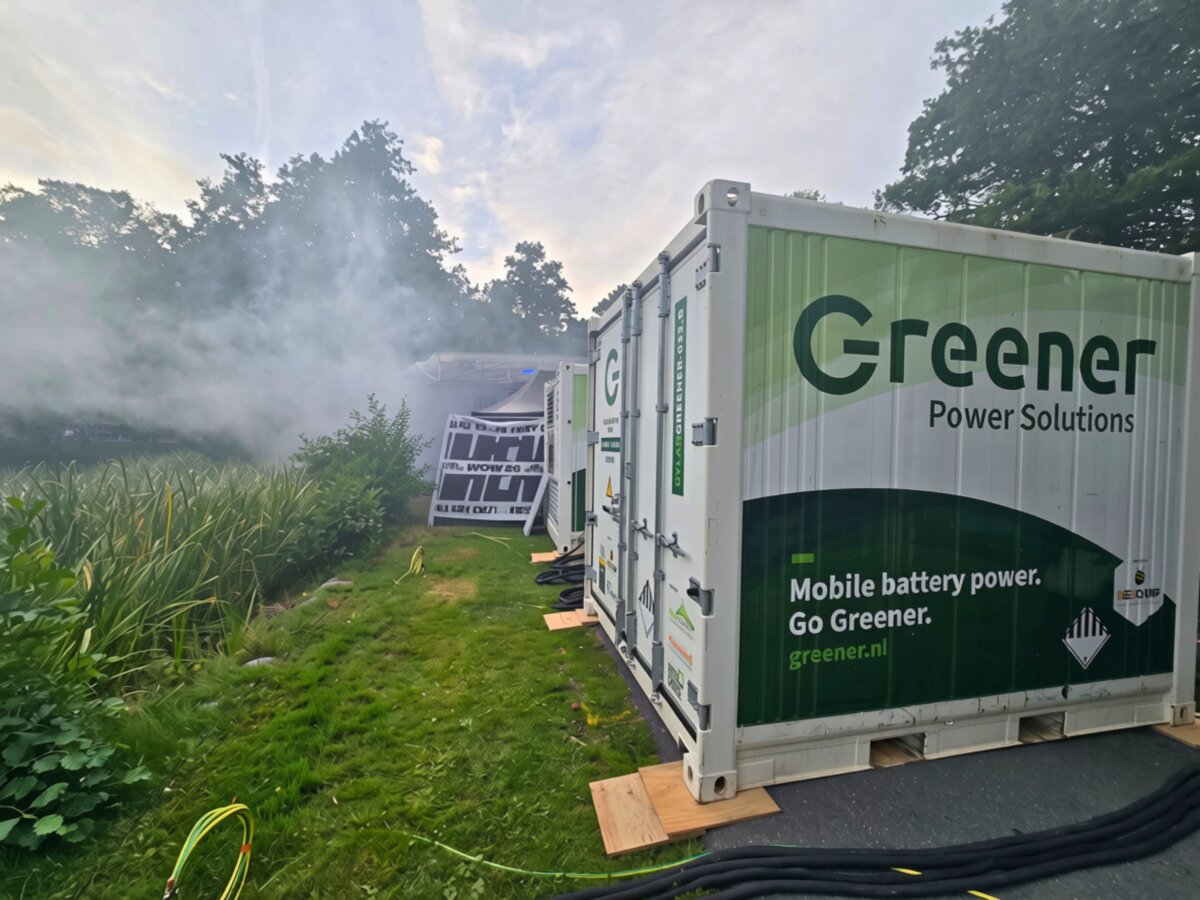
On behalf of Vattenfall and Live Nation & Luger, Greener Power Solutions together with Zeppelin Energy Rental Sweden, powered Way Out West in Gothenburg, Sweden.
Way Out West is one of Scandinavia’s leading music and culture festivals. Temporary power was needed for the three-day festival. The Gothenburg festival Way Out West has broken its attendance record for the fifth consecutive year, after 81,500 people made their way to the festival grounds in Slottsskogen.
There was a clear sustainability brief for the festival, including vegetarian meals and powering the stages with as much fossil-free energy as possible.
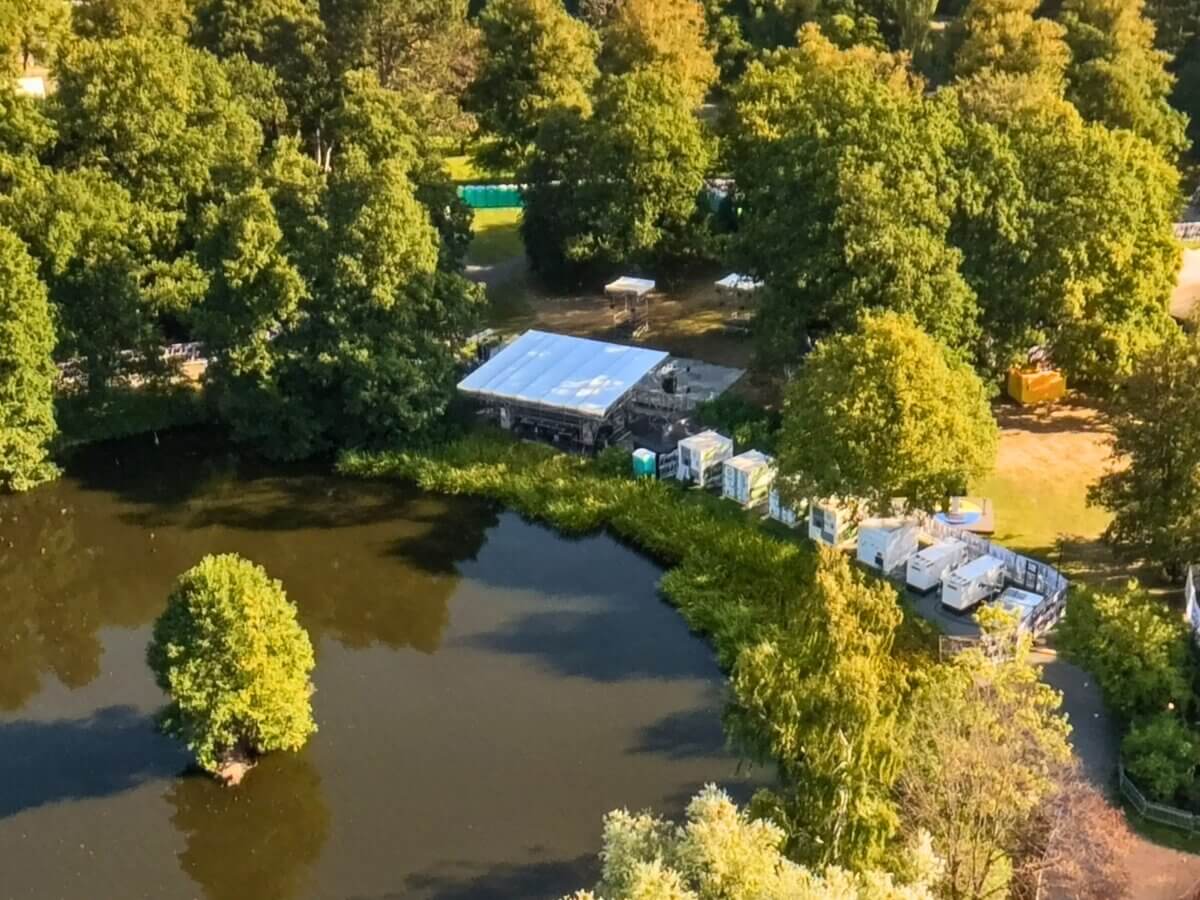
The setup: Five Greener battery systems (a combination of 318 kVA and 270 kVA) with a total storage capacity of 1,704 kWh, forming a microgrid in a droop configuration, backed up by two 270 kVA generators. A 100 Amp grid connection was located 130 metres from the power setup. The batteries powered two areas: the main stage and the food court, lighting, and site services.
The goal: the smallest possible carbon footprint across every day of the festival.
THE CHALLENGES OF FESTIVAL POWER
Powering a live event is not like powering a building. A building draws a relatively steady load. A festival does not.
Sound, lighting, and video all peak at the same moment. The energy demand follows the show: high intensity, then a drop, then a spike again. Loads ramp up in a very short time and the difference between the peak and average load is large.
The traditional solution for temporary power in this case is a diesel generator. Generators produce energy via combustion engine. They have rotating parts, which means there is a lag between a load change and the generator’s response. Generators are at their most efficient with constant high loads, but rapidly changing loads decrease their efficiency significantly.
A battery has no rotating parts. It is inverter-based, which means it can respond to a change in demand almost instantly.
This difference matters when the load changes as fast as it does in a live performance environment. A battery handles the highs and lows easily. It delivers power for sudden spikes without the lag and without the need to burn diesel.
A SMALL GRID AND LONG CABLES
The grid connection at Way Out West was 50 Amps, located 130 metres from the power setup.
At that cable length, a problem emerges. Cables create resistance. The longer the cable, the more resistance. That means the voltage of the power drawn from the grid drops across the cable. The 50 Amp grid connection at Way Out West could not deliver reliable power to the site under load. It was not enough to run the event on its own.
But it was still very much worth using. Both from a sustainability and a cost perspective.
Grid electricity in Sweden costs between 3 and 10 cents per kWh. Electricity from a diesel generator costs around 1 euro per kWh. The current volatility of fuel prices is driving this margin even higher. Every kilowatt-hour drawn from the grid instead of a generator is a cost saving and an emissions saving.
As battery systems continue to develop the sustainability and economical goals start to go hand in hand. One is no longer a trade-off for the other.The goal was to use as much grid energy as possible and as little generator energy as possible. Greener’s smart batteries made that happen.
EMS: THE INTELLIGENCE BEHIND OUR SMART BATTERIES
The Greener EMS (Energy Management System) is what turns a collection of batteries, generators, and a grid connection into an intelligent power setup.
Different power assets, that wouldn’t usually be able to be connected, are able to work much more efficiently with the addition batteries.
The EMS continuously monitors the state of each asset in relation to the state of charge and required power at the load. Depending on the State of Charge (SoC) of the batteries the grid connection is utilised to charge the batteries. If the batteries are draining below a certain threshold the backup energy source, the generator, is turned on the provide additional energy. The generator is switched off again at the set upper limit to prevent that the generator unnecessarily running.
The result is a system that prioritises the cheapest and cleanest available source at every moment. Grid first. Stored energy second. Generators only when necessary.
Solutions are not always perfect. But step change is possible. At Way Out West, the smallest achievable carbon footprint came not from a single fossil free energy source but from a system intelligent enough to optimise across all of them.
The grid connection was always the first source of energy, because it is the cheapest and lowest-emission source available in most cases. The generators filled the gap when the grid alone was not enough.
That logic repeated across three nights: use the grid as the base, add generator power only when needed, and have the batteries fully charged and ready before the first act of the next day.
DROOP: HOW FIVE BATTERIES WORK AS ONE SYSTEM
Five battery systems. Two generators. One grid connection. Getting them to work together without a central controller is what droop control makes possible.
In a standard multi-battery setup, there is one central controller that decides how load is shared between batteries. If that controller fails, the system fails. Droop removes that single point of failure entirely.
In a droop-controlled microgrid, the batteries share information about the load using the frequency and voltage of the microgrid itself. When demand increases, the microgrid frequency drops. Every battery reads that drop and increases its output. When demand falls, frequency rises and every battery reduces its output. The load is shared automatically, without any central signal.
Because all five battery systems are reading the same microgrid frequency, they respond together and stay balanced. If one system were to fail, the others would detect the frequency change and increase their output to compensate, automatically and immediately.
At Way Out West, the droop configuration connected five batteries, two generators, and the national grid into one coherent system. The batteries handled the dynamic show loads. The generators and grid supplied the energy that kept the batteries charged. No single point of failure. We created the most efficient and sustainable setup possible with our smart batteries.